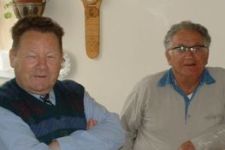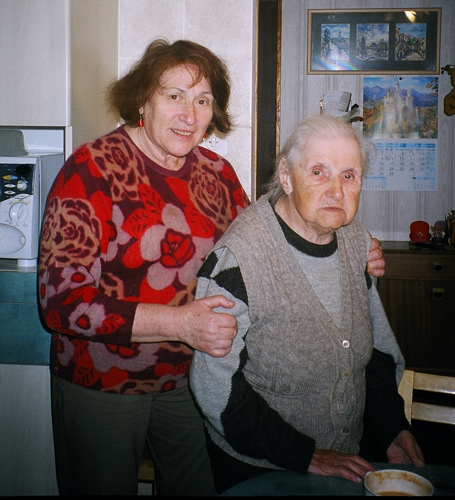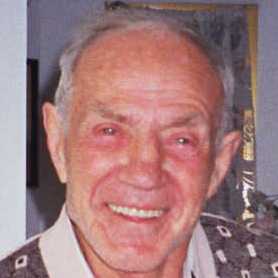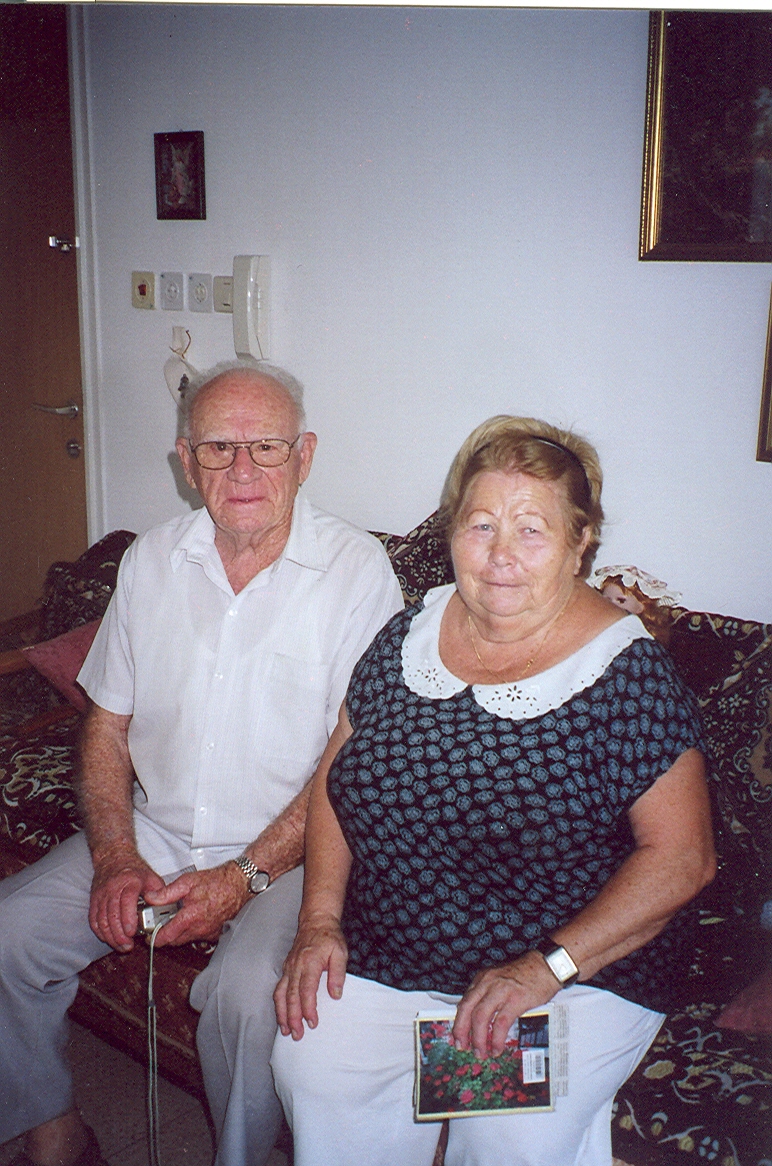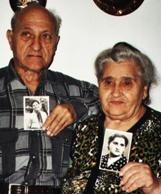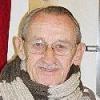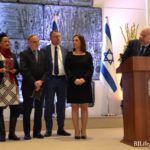
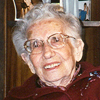
Valentin lived with his wife, son, daughter in-law and grandson in Holon. They have been in Israel for eight years. During WW II, Valentin, his brother and father saved a Jewish woman by giving her Valentin’s sister’s papers. They were also able to hide two other families in a basement in their apartment. At one point, the Germans captured Valentin’s father and some of the Jews they were hiding, but released them after they were presented with false documents and a bribe.
They were also able to hide two other families in a basement in their apartment. At one point, the Germans captured Valentin’s father and some of the Jews they were hiding, but released them after they were presented with false documents and a bribe.
BARANEK, Modesta
Modesta Jadlina and her parents, Jan and Marianna, lived on a farm in the village of Okrzeja in the Lublin district. In May 1943, 15-year-old Modesta met Chaim Baranek, a Jew who had escaped with a group of forced laborers from the nearby Wola Okrzyska estate, under German administration. Baranek calmed the frightened girl and asked her for help.
They were also able to hide two other families in a basement in their apartment. At one point, the Germans captured Valentin’s father and some of the Jews they were hiding, but released them after they were presented with false documents and a bribe.
BROMBERG, Tamara
Like many who lived in Nazi-occupied Odessa, Tamara Maximenok-Bromberg has vivid memories of being locked in the Jewish ghetto with her mother and being refused permission to leave.
But unlike the Jews of Odessa, who were sent to the ghetto against their will, Maximenok-Bromberg and her mother were non-Jews who empathized strongly with the suffering of their neighbors and snuck into the ghetto as often as possible to bring food and warm clothes for their Jewish friends, bribing the guards at the gate if necessary.
On one occasion, they nearly didn’t make it back.
“We managed to talk one of the guards into letting us in,” Maximenok-Bromberg recalled recently from her modest apartment in Haifa, which she shares with her Jewish husband, Shimon. “But when we finished and went to the gate to leave, the guards had changed and the new guard didn’t know us and wouldn’t let us out.”
The two spent a terror-filled week in the ghetto before her mother convinced the guards they weren’t Jews and didn’t belong there. The key to their survival was Maximenok-Bromberg’s mother’s ability to speak Greek, which the Nazi guards accepted as proof that she was of Greek – and not Jewish – descent.
The hardship, however, failed to weaken their sense of purpose. The two continued to make the long trek to the ghetto and even a prison camp whenever conditions allowed, relying on Maximenok-Bromberg’s small, thin frame to slip in and out of restricted areas to drop off regular deliveries of food and clothing.
“My mother always insisted, ‘We have to do this,’” Maximenok-Bromberg says about her life-saving efforts, which also included finding a hiding place for a Jewish family of four and providing for their needs despite food shortages for themselves and other local residents.
“It was simply something we felt in our souls we had to do,” she says. “We knew about the risks – there were signs posted everywhere warning against helping Jews – but we just let ourselves forget what could happen to us and focused on what we felt we had to do.”
(Excerpt from “Hidden Heroes” by Alex Margolin, Jerusalem Post, April 13, 2007)
BUDNIK, Adela – Deceased 2009 – widow of Piotr Budnik
The Hellreichs lived with their three children in the village of Kaczanowka, in the Tarnopol district, not far from Piotr Budnik, an unmarried farmer who lived in a cottage with his elderly parents. When the Germans occupied the area, the local Jews, including the Hellreichs, were sent to the Tarnopol ghetto. In 1942, when the Germans began liquidating the ghetto, Budnik remembered his former neighbors and risked his life by entering the ghetto to rescue the children. Knowing that his elderly parents would object to his hiding the children, Budnik kept their presence a secret from them.
After preparing a hiding place for them in an outhouse on his farm, Budnik tokk care of the three young refuges single-handedly. His task was made all the harder by the fact that he had to keep their existence hidden from his parents. In order to provide for their upkeep, Budnik sold produce on the market without his parents’ knowledge. Although the Germans and their Ukrainian accomplices periodically raided the village in search of Jews, they never discovered the Hellreichs’ hiding place. However, after Estera and Wolf contracted typhus, the danger of discovery grew and Budnik had no option but to move them to a bunker in a distant field, which he himself had dug. Budnik continued to visit them in their new hiding place, providing them with bread and water, even when he himself contracted typhus. The Hellreich children were liberated in the summer of 1944. After the war, Budnik married Adela and they immigrated to Israel together with Estera and Wolf.
In October 18, 1966, Yad Vashem recognized Piotr Budnik as a Righteous Among the Nations.
(Excerpt from “The Encyclopedia of the Righteous Among the Nations”, Poland, Yad Vashem Publications, p.119-120)

CSIZMADIA Sisters: FISCHER, Olga
CSIZMADIA, Malvina, SHURANI, Orna
The Csizmadia sisters: Olga Fischer, Malvina Csizmadia and Orna Shurani
Olga (1922-2006), Malvina (b. 1926) and Orna (b. 1928) are sisters. Together with their mother, they saved more than 25 Jewish men from a work camp in Hungary.
Upon the Nazi invasion to Hungary in 1944, a work camp was established right by the home of the Csizmadia family. The day that the barb wired fence was constructed, Malvina climbed a tree in her garden to see what was on the other side of the fence, and started talking to a Jewish man from the camp. When she asked if there was anything she could do to help him, he told her that she could mail his letters. From them on the Csizmadia family helped him and others with whatever they could. In addition to supplying food and necessities, the family home became the Jews’ connection to the outside world; the mother and sisters brought newspapers, transferred mail and even hosted relatives of the men in the camp in their house.
With the advancement of the Russian army, the Csizmadias were afraid that the Nazis would kill everyone or take them to a concentration camp. They decided to find hiding places for as many men as they could. When the time came, the mother and sisters escorted the men through the area ridden with German and Hungarian soldiers, to hiding places on farms nearby. They kept bringing food and moving men from hiding place to hiding place until the area was liberated.
After the war, both Orna and Olga married men that they rescued, and moved to Israel upon the founding of the State. Malvina and their mother joined them in Israel and few years later. All three sisters converted, and moved to Northern Israel, where they still live today.
Prior to hear death in the summer of 2006, Olga lived in her home in Kiryat Motzkin. She spent her time visiting with her family and enjoyed watching sports. Her husband, whom she saved, lives in a special nursing home
Malvina now lives in a nursing home on a Kibbutz, in Northern Israel.. She has three grandsons, who all served in combat units in the IDF. When her youngest grandson was drafted, he visited Yad Vashem in uniform and gave his first salute to his grandmother’s tree in the Avenue of the Righteous Among the Nations.
Orna’s house is in Nahariya, close to her children, grandchildren and great-grandchildren. While visiting Orna, ATZUM staff met 4 generations of women in her family. During the Second Lebanon War, Orna’s house in Nahariya suffered from two direct rocket hits. Orna since has suffered from a stroke and now resides in nursing home not far from her Nahariya home.
DANKOV, Regina – Deceased 2009 – widow of Spiro Dankov
Regina’s late husband, Spiro, saved the lives of 23 Jews during the Holocaust.
After a pogrom in Sofia, Bulgaria, in 1943, Spiro followed up on the Jews who were evicted and helped them survive in various ways. He supplied food to Jews arrested in the Somobit work camp. Spiro looked after belongings that the Jews had left behind, and also helped Jewish families stay in contact. After the war Spiro would smuggle Jews to the border, as part of their illegal immigration to Israel. He was arrested because of this activity.
Regina grew up in Bulgaria and was studying law until she was not allowed to continue her studies due to the fact that she was Jewish. She survived the war and upon arriving in Israel she became a nurse. After her first husband passed away she was introduced to Spiro, who escaped from Yugoslavia to Israel with the assistance of those whom he had saved. They were married for 23 years until his death a number of years ago.
HORNUNG-TOMCZAK, Anna
In 1939, Leon Hornung, his wife and children moved from their hometown, Cieszyn, in Upper Silesia, to Stryj, in the Stanislawow district, under Soviet rule. When the Germans occupied the region, his wife and younger children were interned in the ghetto and later, during the liquidation of the ghetto, sent to the Belzec extermination camp while Hornung remained on the Aryan side of the city with his two elder sons.
Since they spoke German they were able to masquerade as Volksdeutsche and found work in a German construction company in Podwoloczyska, in the Tarnopol district. In order to avoid suspicion Hornung and his sons employed a Ukrainian maid name Anna Tomczak. Only when the company’s management demanded to see their documents and they had to flee the city did Tomczak realize that her employers were Jewish. After the three moved to Drohobycz and found work as Poles, they decided to send for Tomczak. Tomczak, who looked Aryan enough to allay any suspicions concerning the Hornungs’ origins, pretended to be Leon’s wife. To her credit, she never made the Hornungs feel that they were at her mercy but faithfully fulfilled her role as housewife and mother, frequently helping Hornung and his children out of thorny predicaments. In time, Hornung and Tomczak became more than friends. Tomczak stayed with Hornung and his children until the area was liberated in August 1944. After the war, Hornung and Tomczak married and immigrated to Israel together with Hornung’s two sons.
(Excerpt from”The Encyclopedia of the Righteous Among the Nations”, Poland, Yad Vashem Publications, p. 278)
IMSHENIK, Galina
Left: Elena Dolgov and Galina Imshenik, Jerusalem, 2006
The story of Galina Imshenik and Elena Dolgov is an inspiring tale of love, care and survival, beginning in a small village in White Russia over 60 years ago and continuing to this day in Jerusalem.
Galina Imshenik was born in Kiev in 1912. At the beginning of World War II, Galina lived in a small village in White Russia (Belarus) with her husband Vladimir, a priest, and their 7 year old son.
Elena Dolgov (then Zodishsky) was born in a neighboring village in 1939 to a prominent Jewish family. Both her parents were well known physicians.
When a ghetto was constructed in 1941, Vladimir and Galina Imshenik risked their lives and the lives of their family members, taking Elena into their home and caring for her as a daughter in every way. The danger was enormous, intensified by Elena speaking Yiddish. Galina’s mother lived with them and spent full days speaking to Elena in order to teach her Russian. In 1943, a suspicious neighbor reported the Imsheniks to the police. Galina, Vladimir, Galina’s mother and Elena were questioned by the Gestapo and released. By this time, Vladimir and Galina were the people Elena recognized as her parents.
Elena’s biological mother and brother were among the few family members who managed to survive. After the war, they approached the Imsheniks to take Elena with them to St. Petersburg (Leningrad). Since Elena did not remember her biological family, the process of leaving the Imsheniks was extremely difficult. Elena eventually acclimated to the new situation, but stayed in close contact with the Imshenik family including the newer additions to the family– 3 grandchildren and 3 great grandchildren.
When Elena decided to make aliya after the collapse of the Soviet Union, she was determined to take Galina with her. In 1992, Galina, and Elena and her family moved to Jerusalem. The ties forged during and after the war were such that Galina left her home and her son and his family in Russia to live with Elena in Israel.
Today, Elena and her husband live with Galina, who is very frail and needs much assistance. ATZUM provides Galina with a Russian speaking volunteer who visits regularly.
IVANOV, Mladen
As a youth in Sofia, Bulgaria, many of Mladen’s friends and neighbors were Jews. His girlfriend from age 13, Butcha, was Jewish as well.
In 1942, Bulgarian Jews were expelled to provincial towns along the Danube River. Mladen moved from his home in the city to the town of Pleven, to where Butcha had been expelled, helping her and other Jews in the area.
He brought them food from his father’s grocery store and assisted them in many ways. On one occasion, Mladen was walking down the street when the local police started criticizing a group of Jewish youth. He became so upset, he started hitting the officer.
Mladen paid a personal price for his deeds. In late 1943, he was caught giving false documents to two Jews who escaped from work camps. Mladen’s skull was cracked as a result of harsh beatings and he was put in jail until the end of the war.
Mladen and Butcha married shortly after the war. In 1948, the two planned to move to Israel, together with Jewish friends and Butcha’s relatives. While traveling to the boat to take them to Israel, someone mentioned that Mladen wasn’t Jewish, and the couple was forced to return back. Over the years, Mladen and Butcha would come to Israel to visit their family and friends. During these visits Mladen would work in various building jobs in order to make money to take back to Bulgaria.
In 1990, Mladen and Butcha settled in Israel. Their two children also live in Israel, as well as some of the grandchildren and great-grandchildren. Butcha passed away in the summer of 2005, and Mladen has had a very hard time since then.
Despite the hard loss, Mladen continues to smile. He hosts his children, grandchildren and great grandchildren in his house every weekend, and treats them to one of his specialties – home made noodles.
KAROLICKA-KARPINSKA, Janina
In April 1943, after the outbreak of the Warsaw ghetto Uprising, Hilary Kochanski and Marian Stolinski escaped to the Aryan side of the city, where Malka, Kochanski’s wife, was hiding. After numerous reversals of fortune, the Kochanskis and Stolinski moved in with Jania Karpinska, a young widow with a four-year old boy who was already sheltering Wincenty Karolicki, a fugitive from the ghetto.
Some days later, Karpinska also took in Shlomo Ginsburg. In risking her life to save the refugees, Karpinska was guided by humanitarian principles, which overrode considerations of personal safety or economic hardship. Due to the cramped conditions in her apartment and fear of discovery by neighbors, Karpinska decided to rent a summerhouse for the refugees in the nearby resort town of Izabelin, where they stayed for some months under Karpinska’s care. In due course, the refugees, with Karpinska’s help found hiding places in and around Warsaw. In 1944, after the suppression of the Warsaw Uprising, Karolicki returned to Karpinska’s apartment in Izabelin, where he stayed until the area was liberated by the Red Army in January 1945. After the war Karolicki and Karpinska married and immigrated to Israel. The other survivors also immigrated to Israel.
On March 13, 1997, Yad Vashem recognized Janina Karolicka (Karpinska by her first marriage) as Righteous Among the Nations.
(Excerpt from”The Encyclopedia of the Righteous Among the Nations”, Poland, Yad Vashem Publications, p. 337)
KOLESNICHENKO, Zinaida
Zinaida Kolesnichenko was 16 when the Wehrmacht entered Odessa. At the same time, Tzila Nikolskia, a Jewish woman, witnessed the murder of thousands of Odessan Jews in nearby Dalnik. Tzila escaped, reaching a cinema in Odessa run by Tulik, a mutual friend of her and Zinaida. Tzila hid in the cinema, closed due the warwhile Tulik and Zinaida supplied her food. The situation deteriorated forcing Tzila to leave her cover.
After an extended period on the run, hungry, barefoot and covered with lice, Tzila managed to return to the street where Zinaida lived. Zinaida and her family took Tzila in and hid her in their tiny one room apartment, almost adjacent to a German supply unit. When the situation again became too dangerous, Tzila left their apartment and hid in parks and cemeteries. Zinaida brought her food, took care of her when ill and at night brought her back to the house where she could wash and change clothes.
After the war Zinaida married a Jewish man and they had a daughter named Svetlana. Zinaida moved to Israel a number of years ago together with Svetlana and her family. Svetlana volunteers in the Educational Center for Holocaust Survivors and Righteous Gentiles in Holon. Svetlana’s daughter Tatiana is a geriatric social worker, a third generation devoted to helping others.
KONDRAYEV, Celina – Deceased 2009 – widow of Ivan Kondrayev
Left: Valentina and Celina, Pardes Hanna, Israel
Shortly before the war, Ivan was sent to work in an area near the Russian-Polish border. When the Germans invaded Russia, Ivan was taken captive, along with the rest of the people in the area. After five months in captivity he managed to escape to Ukraine. There Ivan found work as a guard for a dairy.
The dairy that Ivan worked in was opposite the sealed ghetto. Jewish youth would secretly sneak out in order to bring food back to the ghetto. One of these individuals was Celina, age 15. On one of her excursions, she tried to enter the dairy. Celina was terrified upon encountering Ivan, but Ivan calmed her. From that day on, Ivan prepared small packages of bread and dairy products for Celina and other children to sneak into the ghetto without getting caught.
Upon the liquidation of the ghetto, Ivan found hiding places for Celina and a number of Jews who managed to escape. Ivan would transfer them to different hiding places, thus avoiding danger. Towards the end of the war, Ivan took Celina to hide in the warehouse where he lived in. It was there that he proposed to her, and the two married shortly after the war.
Ivan and Celina, together with their daughter Valentina, came to Israel in 1990 from Ukraine. Ivan passed away in the summer of 2005. Valentina spends her time caring for Celina. The two spend their summers in Ukraine visiting with family and friends.
KWIATKOWSKI, Eva – widow of Eugeniusz Kwiatkowski
During the German occupation, Eugeniusz Kwiatkowski worked as a clerk in an office of the municipality of Torczyn in the Wolyn district. The office distributed agricultural produce to the army and an adjacent department referred German officials and military personnel to apartments in the town. One day in September 1942, a 20-year-old woman, Chava Dudik, came into the office. She had escaped two months before from the Troscianiec ghetto and since then had been homeless, suffering countless ordeals.
Dudik approached Kwiatkowski, introduced herself as a Pole, and asked for a place to live. When Kwiatkowski realized that the woman was a Jewess, he rose from his chair and took the surprised refugee on his bicycle to the home of his parents, who lived in a nearby village. Fearing that Dudik’s true identity might be discovered, Kwiatkowski found her another shelter in the home of his acquaintances in another nearby village, and when the neighbors then also realized she was Jewish he moved her to a village near Luck, where she obtained work as a caregiver for an elderly couple from Czechoslovakia. Later in 1943, German soldiers who were retreating from the front filled the village in which Dudik was working. As a result, Kwiatkoswski decided to leave his job and together with Dudik moved to the city of Rzeszow, where they remained until liberation. Before that, he managed for a time to give shelter to Israel Stern who had fled the Torczyn ghetto. After the war, Kwiatkowski married Dudik and in 1946 they immigrated to Israel and settled in Jerusalem. Stern also immigrated to Israel after the war and there met Kwiatkowski, who had saved his life. Kwiatkowski passed away in Jerusalem in 1990.
On March 8, 1987, Yad Vashem recognized Eugeniusz Kwiatkowski as Righteous Among the Nations.
(Excerpt from”The Encyclopedia of the Righteous Among the Nations”, Poland, Yad Vashem Publications, p. 436)
LEWICKA, Jaroslawa
Immediately after the occupation of the town of Zloczow, in the Tarnopol district in July 1941, Aleksander Lewicki came to the aid of his Jewish friends who were in trouble. When the Germans introduced measures restricting the movement of Jews and forbidding them to purchase food and began confiscating their apartments, Lewicki began supplying his Jewish friends with food and medicine.
He would not have been able to do so without the help of his courageous granddaughter, Jaroslawa, who acted as his courier without awakening the suspicions of the Ukrainian guards. In December 1942, when a closed ghetto was set up in Zloczow, Lewicki, his daughter Katarzyna, and his granddaughter continued to help the incarcerated Jews until the liquidation of Zloczow’s Jewish community in April 1943. Among the handful of survivors of the massacre perpetrated by the Germans and Ukrainian nationalists against local Jews were two Jewish girls whom the Lewickis sheltered and looked after until July 1944, when the area was liberated. The Lewickis also helped another group of 25 Jewish refugees who were hiding in the basement of a ruined house two kilometers away by bringing them food despite the distance and the danger accompanying the purchase of such large quantities. In throwing in their lot with their charges, the Lewickis were inspired by deep compassion and Christian love, and never expected anything in return.
On September 21, 1989, Yad Vashem recognized Aleksander Lewicki, his daughter, Katarzyna Lewicka, and his granddaughter, Jaroslawa Lewicka, as Righteous Among the Nations.
(Excerpt from”The Encyclopedia of the Righteous Among the Nations”, Poland, Yad Vashem Press, p. 454-455)
MARTY, Violette – widow of Jean-François Marty
Jean-François Marty, the son of a school principal, lived in Toulouse and was active in the French underground. In 1942, he met Violette Nahoum, who had fled to Toulouse from Paris with her parents and brother. Marty, who sympathized with the Nahoums, provided them with forged identity and ration cards and found a French family to shelter them. He warned the Nahoums of impending raids, helping them to escape in time. This exposed Marty to substantial risks, because large numbers of German troops were stationed in the vicinity of Toulouse and an SS division was permanently billeted in private homes in the area.
In September1943, when the Nahoums no longer felt secure, M. Nahoum decided to slip into Spain together with his son. Marty accompanied the father and son and helped them escape across the border. From there, they continued to Morocco. When the roundups of Jews intensified in May 1944, Mme. Nahoum and her daughter decided to leave Toulouse and flee to Spain in M. Nahoum’s footsteps. Marty provided forged visas which allowed them to stay in the closed military zone near the border and found a border runner to help them cross. Marty then accompanied Nahoum and her daughter and, using secret trails, they reached the town of Lérida in Spain, where they were put in the town jail. After their release, the Nahoums continued on to Morocco, where the family was reunited. Marty was caught by the Spanish police and imprisoned, but he later escaped and joined the Free French. After the war, Marty and Violette Nahoum resumed their friendship, married, and settled in Israel.
On January 14, 1995, Yad Vashem recognized Jean-François Marty as Righteous Among the Nations
(Excerpt from”The Encyclopedia of the Righteous Among the Nations”, France, Yad Vashem Press, p. 381)
MEDUSHEVSKAYA, Wanda
During the war, Wanda lived with her mother, Anna, in Budki, a village on the train route between Odessa and Moscow. Wanda’s father, Vasili was a tailor, killed in one of Stalin’s purges. He had been very friendly with the Margolis family, who were Jewish. They asked Wanda’s mother if she would help them. The Medushevskayas hid 5 members of the family, 3 children and 2 adults, for three years. The Jews hid in the cellar during the winter and in the attic during the summer. After the war the two families remained close friends, to the extent that a distant cousin married one of the Margolis children.
Wanda’s son married a Jewish woman and came to Israel in 1992. Wanda joined in 1997. Wanda sings in a choir twice a week, walks daily and receives visitors warmly with her cheerful personality.
POLISCHUK, Viktor – Deceased 2009
Viktor Polischuck and his late wife, Elvira
Viktor Polischuk lived in his uncle’s household in Ukraine. When the Germans liquidated the Gaysin ghetto in 1943, it was clear that the Jews’ days were numbered. One night in the summer of 1943, Viktor’s uncle brought home a Jewish father and son, Lev and Arkadiy Burshtein, from the ghetto. Viktor’s family took them into their home, providing food and shelter and caring for all of their needs.
In October 1943, when the retreating Germans intensified their atrocities against the Jews still living in occupied territories, Viktor’s family found a way to move Burshtein and his son to a safer hiding place in Transnistria, which was under Romanian control. They found shelter there until the liberation. In 1995, Yad Vashem recognized Viktor Polishchuk as Righteous Among the Nations and shortly afterwards he moved to Israel.
RADZIO, Aldona – widow of Jerzy Radzio
In 1942, after the liquidation of the Legionow ghetto near Warsaw, Samuel Batz, his wife, Dvora, and his brother-in-law, Abram Lipszyc, were sent to the nearby Tarchomin camp, where they were employed locally as forced laborers, while Lea Batz, Samuel’s mother, hid nearby. During a work break, Samuel Batz met Jerzy and Slawomir Radzio, two local youngsters, with whom he became friendly. In October 1942, when the labor camp was about to be liquidated, the Radzio brothers decided to save the lives of the four members of the Batz family.
SANEVICH, Peotr
Click here to read an interview with Peotr Sanevich in Hebrew.
xxxxxxxxxxxxxxxxxxxxxxxxxxx
xxxxxxxxxxxxxxxxxxxxxxxxxx
SKWARA, Zdzislaw – Deceased 2009
At the start of the war, Efraim Weinberg, a tailor, and his wife, Ester, moved with their baby daughter, Chava, to Baczki near Lochow in the county of Wegrow, Warsaw district. Among Weinberg’s customers were the Skwaras from the nearby village of Kamionna and the two families soon became friends. When the situation of the local Jews deteriorated, the Skwaras provided the Weinbergs with food, carried out various errands for them, and offered to shelter them in times of emergency. In the autumn of 1942, when the Germans surrounded Baczki, the Weinbergs fled straight to the Skwaras’ house, leaving all their possessions behind.
At first, the Skwaras hid them in a storehouse on the farm, but when the weather turned cold they rented a room for them with a neighbor and continued to see to their needs. When they had to leave the room, the Weinbergs once again turned to the Skwaras, who again prepared a special hiding place for them. The Weinbergs stayed with the Skwaras until shortly before the liberation, when they moved to the nearby forest. The Skwaras continued to look after their Jewish charges in the forest, even though their house had been burned down and they were left virtually destitute. For two years, the Skwaras hid the Weinbergs in a hostile environment where Jews were routinely betrayed. So dangerous was the rescue operation that they kept the refugees’ presence hidden even from their children, except for their son, Zdzislaw, who helped look after them. Being devout Catholics, the Skwaras felt it was their duty to save the Weinbergs and never asked for anything in return. After the liberation, they bought Weinberg a sewing machine to enable him to earn a living and rehabilitate his family. In saving Jews, Skwara and his family were guided by humanitarian principles, which sprang from their religious faith. Skwara was fond of saying,”God created us all equal, and we all have a right to live.”After the war, the Weinbergs immigrated to Israel.
On July 25, 1981, Yad Vashem recognized Eugenia and Wladyslaw Skwara and their son, Zdzislaw, as Righteous Among the Nations.
(Excerpt from”The Encyclopedia of the Righteous Among the Nations”, Poland, Yad Vashem Publications, p. 720-721)
SYCZ-SCHWARZ, Irena – widow of Andrzej Sycz
Irena Schwarz’s father got her out the Lwow ghetto when she was nine years old and placed her in the care of Janina Sycz, who lived with her children, Andrzej, Wlodzimierz, and Irena. Because of the danger they faced, Sycz and her children moved into her father’s home in Skarzysko-Kamienna, where she obtained Aryan papers for the Jewish girl and represented her as a relative. Irena’s true identity was not disclosed even to Sycz’s father and the girl was treated like a full-fledged member of the family.
Although their home was impoverished, the Syczes shared their meager food with their ward without remuneration until the end of the occupation. After the war, Janina Sycz located relatives of Irena’s in the United States and placed the girl in their custody. Subsequently, Irena moved to Israel and stayed in close touch with Sycz until the latter died. Her son, Andrzej Sycz, also settled in Israel and became a permanent resident there. Irena Schwarz’s friendship with Irena Dragicewicz, Sycz’s daughter, outlasted the war by many years and included economic assistance and visits to Israel.
On June 10, 1982, Yad Vashem recognized Janina Sycz as Righteous Among the Nations. On July 27, 1988, Yad Vashem recognized Andrzej Sycz, his brother Wlodzimierz Sycz, and their sister, Irena Dragicewicz-Sycz, as Righteous Among the Nations.
(Excerpt from “The Encyclopedia of the Righteous Among the Nations”, Poland, Yad Vashem Publications, p. 774)
TARNAWSKI, Miriam – widow of Wilhelm Tarnawski
Wilhelm (Wilek) Tarnawski lived with his Jewish wife in Kopyczynce in the district of Tarnopol in Eastern Galicia during the war. Between 1941 and 1944, he hid 17 of his wife’s relatives in his home. These included Josef and Sara Fried and their two children; Chaim Leib and Helena Kleiner and their child; Eliezer and Mina Fried and their child; as well as Bronia Rozenblatt, Shlomo Fried, and Yacov Preminger.
The Tarnawskis occupied the ground floor apartment but the relatives were hidden in the attic and in a bunker in the cellar. One of the peculiarities of the house was the absence of any stairs; passage from one floor to another required a ladder. From time to time, Wilhelm’s wife had to join her hidden relatives despite her non-Jewish appearance. In 1957, Wilhelm immigrated with his wife to Israel.
On June 29, 1978, Yad Vashem recognized Wilhelm Tarnawski as Righteous Among the Nations.
(Excerpt from”The Encyclopedia of the Righteous Among the Nations”, Poland, Yad Vashem Publications, p. 811-812)
VRANETIC, Ivan
Ivan, a Croatian Catholic, was raised to “love humankind”. In 1942, he began giving shelter to Jews in his home and other safe houses. Because his town of Topusko was on the German border, the Nazis frequently conducted raids and Ivan frequently escaped to the forest with the Jews he was harboring.
Today, in his late ’70′s, he lives in Holon and is the official coordinator of the Righteous Gentiles organization in Israel, tirelessly bringing much help and support to these individuals. To assist those efforts, ATZUM recently purchased a costly and badly needed new pair of eyeglasses for Ivan.
- Deceased 2010
ALTERASZ, Vera
Vera Alterasz dedicated her life to taking care of others. As a young woman in Hungary, she and her sister saved the lives of several people, including her husband, his family and two friends, by hiding them in their own homes. When this later became too dangerous, the sisters arranged for other safe hiding places. Vera’s husband was able to move to Prague after Vera’s sister managed to obtain false papers for him through a local priest. Vera’s husband remained in Prague, where he studied architecture, until he and Vera were reunited at the end of the war.
In December 1948, Vera and her husband came to Israel. They first were placed in a transit camp for new immigrants near Hadera, and shortly after they moved to Jerusalem. While her husband struggled to establish an architecture company, Vera cleaned the streets of Jerusalem in order to make ends meet. She later worked in Hadassah Hospital until her retirement. During this time, she maintained contact with one of the women she had saved, who had moved to Yugoslavia after the war. With Vera’s encouragement, the woman moved to Israel in 1956 where she and Vera remained close friends until the woman passed away.
Vera has one daughter and two grandchildren. After her husband’s death in 1991, Vera continued to live in their Jerusalem apartment. Bright and articulate, Vera tried to remain active, but because her building had many steps, she was unable to leave her apartment. Prior to her death, ATZUM assisted Vera by providing her with several things that improved her quality of life, such as a security lock for her apartment, orthopedic shoes, new eyeglasses and central heating for the winter.
When an ATZUM volunteer had given her a cactus, Vera was happy to have something new to care for. When showing visitors how her cactus was growing and blooming, she would say: “I gave it life”.
- Deceased 2006
AVNI-WIECZOREK, Zofia Marta
In April 1943, ten-year-old Irena Machenbaum, her mother, Tova, and her uncle, Gustav Blajchman, succeeded in escaping from the blazing inferno of the Warsaw ghetto. When they reached the Aryan side of the city, they met a prewar acquaintance, Zofia Wieczorek. Zofia took the three refugees to an attic apartment, which she had rented as a hideout for Jews under her protection.
Gustav Blajchman’s wife, Miriam, and their two children, Natan and Efraim, were already sheltering there. Zofia’s brother, Antoni, built a false wall behind which the Jews could hide in times of danger, while her mother, Aleksandra, took care of all the fugitives’ needs. In due course, the Blajchmans’ son Efraim died. For a week, his body remained in the apartment, until Aleksandra cleverly succeeded in having the child buried under a false name. The Jews remained in the refuge until the outbreak of the Warsaw Uprising in August 1944. The Wieczoreks received no recompense for their actions, which were motivated by purely humanitarian considerations. For a short period, Gustav Blajchman’s sister-in-law and an escapee from the Pawiak prison in Warsaw, Lilian Stern, also stayed in the apartment. Zofia Wieczorek subsequently married a Jewish man by the name of Avni and the couple moved to Israel.
On December 25, 1984, Yad Vashem recognized Zofia Marta Avni née Wieczorek, her mother Aleksandra Wieczorek, and her brother, Antoni Wieczorek, as Righteous Among the Nations.
- Deceased 2006
(Excerpt from “The Encyclopedia of the Righteous Among the Nations”, Poland, Yad Vashem Publications, p. 62)
BAR-NATAN, Celina – deceased 2006
Celina Kujawska was 21 years old when she left her hometown for Warsaw, where she became acquainted with Dr. Adam Rakower and his family. In 1940, Dr. Rakower was arrested by the Gestapo and executed. His wife, Alina, and three-year-old daughter, Elzbieta, were interned in the ghetto, but they remained in contact with Celina. She sent them food parcels, and upon learning of the seriousness of their situation visited them secretly and tried to convince Alina to flee with her daughter. Her efforts were in vain, however.
It was only at the end of 1942, after a large-scale Aktion in the ghetto, that little Elzbieta was concealed inside a sack and entrusted to Celina’s care. Alina herself escaped the next day, and with the help of a Polish acquaintance, Stefan Muras, an apartment was rented for Celina and the fugitives in a suburb of the city. Celina was fully aware of the danger of the enterprise, and great precautions were taken to conceal the presence of the Jewish mother and her child. One day Germans raided the apartment, and only a bribe saved the lives of Alina and her daughter. The three decided to leave Warsaw and, assisted by Muras, they rented an apartment in the summer resort of Anin, near Warsaw. After a time, they were joined by Alina’s sister, Felicias Gelbard, whom Celina brought over from her hiding place in a nearby township in a journey fraught with difficulties. The fugitives lived in constant danger, and it was only owing to Celina’s courage, prudence, and presence of mind that they succeeded in remaining alive until the liberation in January 1945. The survivors later testified that their rescue had been undertaken by Celina in a spirit of selflessness and true friendship, which withstood the perils of the time. After the war, the three maintained their warm friendship and close contact with Celina, who cast in her lot with the Jewish people, converted to Judaism, and immigrated to Israel with her husband.
On December 23, 1987, Yad Vashem recognized Celina Bar-Natan née Kujawska as Righteous Among the Nations.
- Deceased 2006
(Excerpt from “The Encyclopedia of the Righteous Among the Nations”, Poland, Yad Vashem Publications, p. 71)
DOBKOWSKI, Wincenty
Right: Wincenty Dobkowski and Itzik (Jan) Lewin, Givatayim, 2006
In the autumn of 1942, Israel Lewin, his wife, Feiga, their son, Jan, and their daughter, Teresa, fled from the town of Wizna in the Bialystok district. After wandering through fields and forests, the four refugees reached the nearby village of Zanklewo, where they made their way to the home of the Dobkowskis, acquaintances of theirs.
The entire family – Boleslaw and Apolonia Dobkowski and their children, Mieczyslaw, Tadeusz Jan, and Wincenty – helped build two shelters in the farmyard for the refugees. The Dobkowskis received no payment for their heroic act, which sprang entirely from selfless, humanitarian principles.
One day in the autumn of 1943, German policemen arrested Jan Lewin while he was helping the Dobkowskis on the farm. Jan was imprisoned, but even before his captors realized he was Jewish he was freed from prison in a daring rescue operation mounted by the Dobkowskis. The Lewins remained in their hiding place until the area was liberated in July 1944. After the war, they immigrated to Israel, after first signing over the deeds to their home in Wizna to the Dobkowskis as a token of their gratitude. After the war, when neighbors got wind of what the Dobkowskis had done, a gang of anti-Semitic thugs raided their farm, robbed them of their possessions, and beat Boleslaw until he lost consciousness.
On October 31, 1991, Yad Vashem recognized Apolonia Dobkowska, her husband, Boleslaw Dobkowski, and their children, Mieczyslaw, Tadeusz Jan, and Wincenty, as Righteous Among the Nations.
(Excerpt from”The Encyclopedia of the Righteous Among the Nations”, Poland, Yad Vashem Publications, p. 175)
DRAGICEWICZ-SYCZ, Irena
Irena Schwarz’s father got her out the Lwow ghetto when she was nine years old and placed her in the care of Janina Sycz, who lived with her children, Andrzej, Wlodzimierz, and Irena. Because of the danger they faced, Sycz and her children moved into her father’s home in Skarzysko-Kamienna, where she obtained Aryan papers for the Jewish girl and represented her as a relative.
Irena’s true identity was not disclosed even to Sycz’s father and the girl was treated like a full-fledged member of the family. Although their home was impoverished, the Syczes shared their meager food with their ward without remuneration until the end of the occupation. After the war, Janina Sycz located relatives of Irena’s in the United States and placed the girl in their custody. Subsequently, Irena moved to Israel and stayed in close touch with Sycz until the latter died. Her son, Andrzej Sycz, also settled in Israel and became a permanent resident there. Irena Schwarz’s friendship with Irena Dragicewicz, Sycz’s daughter, outlasted the war by many years and included economic assistance and visits to Israel.
On June 10, 1982, Yad Vashem recognized Janina Sycz as Righteous Among the Nations. On July 27, 1988, Yad Vashem recognized Andrzej Sycz, his brother Wlodzimierz Sycz, and their sister, Irena Dragicewicz-Sycz, as Righteous Among the Nations.
– Deceased 2006
(Excerpt from “The Encyclopedia of the Righteous Among the Nations”, Poland, Yad Vashem Publications, p. 774)
LESCHINGER, Nikolay – deceased 2005
Nikolay witnessed the deportation of Odessa Jewry in December 1941. He saved the life of a young Jewish boy, Aleksander Gilerman, who, in an attempt to escape from a deportation convoy, had been injured by gunshots and lay bleeding on the road.
Nikolay pulled him to safety, nursed him back to health in his own home, and kept Gilerman hidden until the end of the occupation in April 1944. Aleksander remained in Odessa until 1979 when he immigrated to the United States. Nikolay immigrated to Israel in the early 90s with his two Jewish daughters, and lived in Beit Shemesh. Before his death in 2005, Nikolay was in need of constant medical attention, requiring his daughters to take costly time away from their work. ATZUM arranged for more home care to assist his daughters in caring for him.
LINTNER, Teresa – Deceased 2007 – widow of Stefan Lintner
Even before the war, Stefan Lintner was known by the residents of Czortkow in the Tarnopol district as being sympathetic toward Jews and employed many Jews in the town’s only cinema, which he owned. When the Germans occupied Czortkow in the summer of 1941, his cinema was requisitioned for the Department of German Propaganda and he was warned to sever all contacts with Jews. Nonetheless, Lintner decided to continue helping Jews and in late July 1941, when a German police unit seized 150 Jews and shot them in the neighboring forest, Lintner sheltered Jews who escaped the massacre.
RACZYNSKI, Shoshana – Deceased 2007 – widow of Stefan Raczynski
Stefan Raczynski, who lived with his family in the village of Wegelina in the Vilna district, was superficially acquainted with Jews in the nearby town of Niemczyn. In September 1941, after the massacre perpetrated by the Germans and Lithuanians against the local Jews, Jewish fugitives began turning up at Raczynski’s home asking for help. Stefan and his family helped the Jewish refugees to the best of their ability and provided them with food and a temporary hiding place.
ROTTER-BOHOSIEWICZ, Helena – deceased 2006
Before and during the war, Helena Bohosiewicz lived with her family in the village of Kozice, near Lwow, where she had a farm. Bohosiewicz was friendly with the Jewish families who lived in her village and in surrounding villages, especially with the Rotter and Hecht families. In 1941, with the occupation of the area by the Germans, and the deportation of the local Jews to ghettos in the various cities, the Rotters and Hechts were interned in the Grodek Jagiellonski ghetto near Lwow. Even then, Bohosiewicz kept up contact with them and came to the ghetto to bring them the little food she could spare.
The Rotters and Hechts knew that in an emergency they could count on Bohosiewicz. When the Rotter’s son, Osiasz, decided not to go into the ghetto but to stay in the village, Bohosiewicz hid him in her home for almost two years, until the summer of 1944, when the area was liberated. In late 1942, 12-year-old Tosia Hecht and her 17-year-old sister, Rosa, the only surviving members of their family, turned up unexpectedly on Bohosiewicz’s doorstep and were given a warm welcome by Bohosiewicz, who hid them and looked after them devotedly. Since Ukrainian nationalists suspected her of hiding Jews in her home, and even searched her house, Bohosiewicz obtained Aryan papers for the sister, which enabled them to find work in the surrounding villages. After the war, the Hecht sisters immigrated to Israel. Osiasz Rotter married Bohosiewicz, who decided to throw in her lot with the Jewish people. In 1950, they immigrated to Israel.
On June 20, 1990, Yad Vashem recognized Helena Rotter (née Bohosiewicz) as Righteous Among the Nations.
(Excerpt from “The Encyclopedia of the Righteous Among the Nations”, Poland, Yad Vashem Press, p. 678)
ROZEN, Yosef – Deceased 2007 – widower of Zofia Katarzna Rozen
Although Zofia Katarzyna Rozen (née Tomczak) was born into a conservative Polish family and received a Catholic convent education, she threw in her lot with the Jewish people from an early age. In 1940, she married Zenon Merenholc, a Jew and the two reached the town of Ostrog in the Volhynia district as refugees. In 1941, with the German occupation of the city, Katarzyna’s husband was killed in one of the early Aktionen and she was left alone with her newborn baby daughter on the Aryan side of the city. Rozen exploited the fact that she was Aryan to help Jews who escaped from the ghetto and did all she could to assist the many Jewish acquaintances who flocked to her door.
SZAFT-SUCHODOLSKA, Jadwiga – Deceased 2007
Jadwiga Suchodolska lived with her family in the village of Krzynowloga Wielka in the county of Przasnysz, Warsaw district. One night in 1942, somebody knocked at the door. It was Michal Szaft. The Suchodolskis had been acquainted with his family before the war. Michal said he had managed to escape from the ghetto and asked for help. The Suchodolskis hid him in a covered hideaway in the hayloft.
They brought him meals three times a day and Michal stayed there until the liberation in January 1945. When he came out of the shelter, he fell ill and had to remain with the Suchodolskis. One day, a group of Polish nationalists entered the house and took Michal with them with the intention of murdering him. Michal luckily escaped and returned to the Suchodolskis. After a time, Michal and Jadwiga married and in 1957 they left for Israel.
On July 15, 1975, Yad Vashem recognized Jadwiga Szaft- Suchodolska, her father, Adam Suchodolski, her mother, Stanislawa Suchodolska, and her brother Stanislaw Suchodolski, as Righteous Among the Nations.
(Excerpt from “The Encyclopedia of the Righteous Among the Nations”, Poland, Yad Vashem Publications, p. 765)